



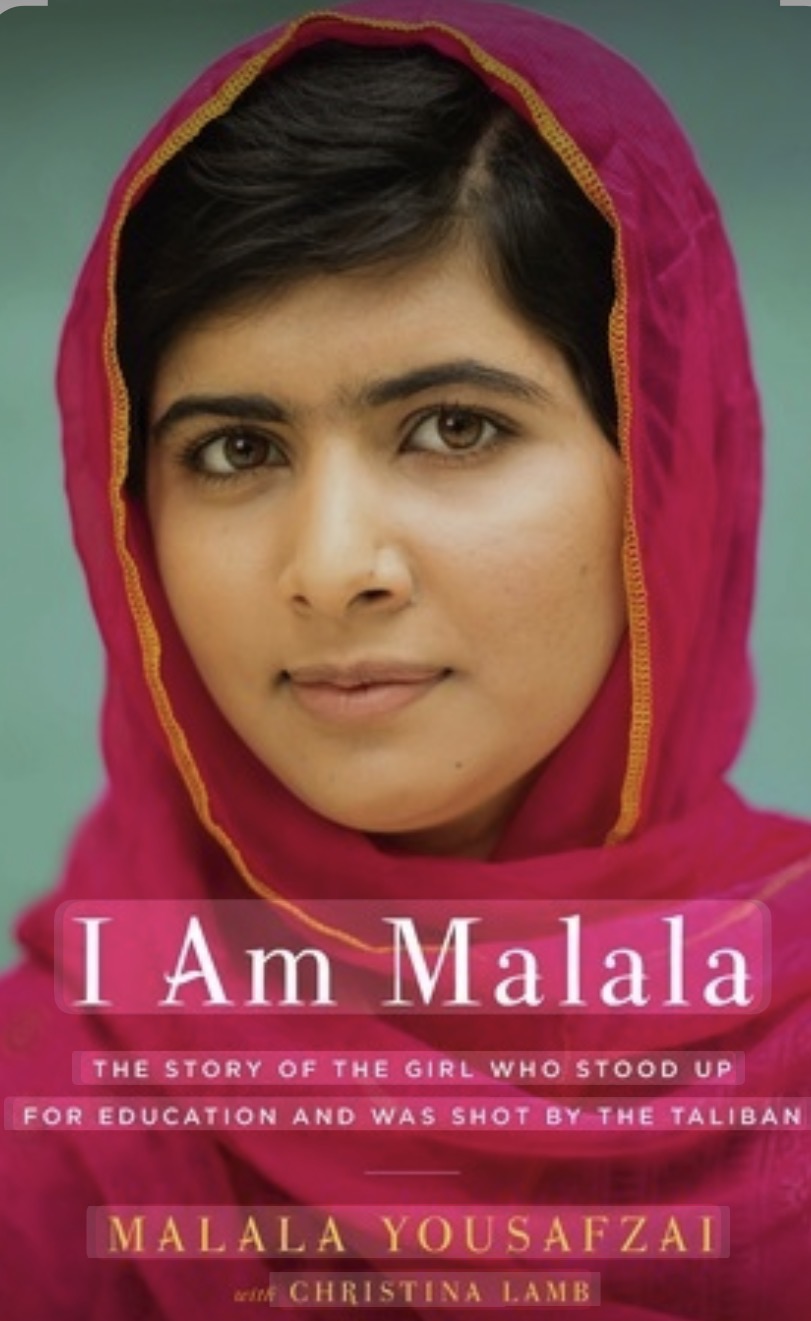
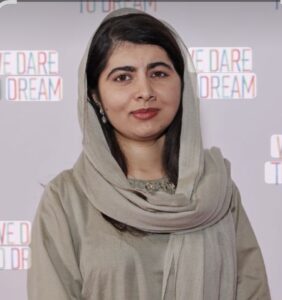
In October 2012, a fifteen-year-old girl was shot in the head on a school bus in Pakistan’s Swat Valley for the crime of insisting that girls deserved an education. The story that followed — of survival, of a Nobel Prize awarded at seventeen, of a name that became shorthand for courage — has been told so many times it risks calcifying into myth. But the real story, fourteen years later, is stranger and more interesting than the legend: it’s the story of a woman still figuring out who she is underneath the symbol everyone built around her.
Beyond the Bus
Malala Yousafzai was born in 1997 in Mingora, in Pakistan’s Swat Valley, the daughter of Ziauddin Yousafzai, a schoolteacher and outspoken education activist, and Toorpekai Yousafzai, who never had the chance to attend school herself. That detail matters more than it first appears. Malala has said that for years she didn’t want to grow up like her mother — dependent, without an education of her own. It was only later, when she finally asked her mother what she had once dreamed of becoming, that Malala got no answer at all. Her mother had never been permitted to dream something for herself. That silence, Malala has said, taught her more about the stakes of her work than any statistic could.
Her path to global attention started small and specific: an anonymous blog for the BBC, written at age eleven, describing what it was like to live under Taliban rule as they banned girls from school. She took the assignment because another girl at her school wanted to write it but wasn’t allowed to by her family. Malala volunteered instead — and inadvertently stepped into the spotlight that would define her life. By fifteen, her advocacy had made her enough of a target that a gunman boarded her school bus and asked for her by name.
She survived, was airlifted to Birmingham, England, for treatment, and — remarkably — returned to school within months. In 2013 she addressed the United Nations. In 2014, at seventeen, she became the youngest person ever to receive the Nobel Peace Prize, sharing it with Indian children’s rights activist Kailash Satyarthi.
The Work That Didn’t Stop
What’s easy to miss, amid the mythology of “the girl who was shot,” is that Malala built an actual institution. The Malala Fund, established in 2013, funds girls’ education programs across countries including Afghanistan, Pakistan, Nigeria, and Brazil, and has become a serious advocacy operation rather than a symbolic gesture. She studied Philosophy, Politics and Economics at Oxford, graduating in 2020, and has since expanded her focus well beyond a single issue — co-producing Suffs, a Broadway musical about the suffrage movement, and launching Recess, an initiative supporting girls and women in sports.
She has also grown sharper and more willing to name names. Speaking at the United Nations and at public events in recent years, she has pushed for “gender apartheid” — her term for the systemic stripping of women’s rights under Taliban rule in Afghanistan — to be formally recognized as an international crime. She has been openly critical of Western governments too, arguing that successive American administrations have quietly compromised on women’s rights when it was politically convenient to do so. It’s a notable evolution: the eleven-year-old blogger has become a woman willing to criticize the very governments that once celebrated her as a hero.
The Person Behind the Symbol
The most revealing recent chapter of her story isn’t a speech — it’s a memoir. In Finding My Way, published in 2026, Malala turned inward in a way her earlier book, written as a teenager, never could. She has described writing it as a form of therapy: a way of reclaiming ownership over events that had, for years, been narrated about her more than by her.
The book — and the conversations she’s had promoting it, including a sold-out talk at Stanford in April 2026 — reveal a woman contending with the ordinary difficulty of being turned into an icon before she’d finished becoming a person. She has spoken candidly about the strange burden of being treated as the singular voice for millions of girls, recalling being challenged at a conference at just fourteen for not doing enough for girls outside her own community. Her answer has held up well with time: activism doesn’t need one hero and one villain, she said — it needs many voices, because no two people’s experience of injustice is the same.
She’s talked, too, about smaller indignities — the online uproar over a photograph of her wearing jeans while at Oxford, and her mental health journey navigating fame that arrived before she’d had the chance to simply be a teenager. Her response to the criticism over her clothing has become something of a personal motto: when something becomes a flashpoint for what she’s supposed to represent, she keeps doing it anyway. The controversy fades in a few days; her sense of herself doesn’t.
Unfinished Business
Perhaps the most striking thing Malala has said recently isn’t about the past at all. Asked how her eleven-year-old self would react to the state of the world today, she didn’t reach for triumph. She said that girl would be disappointed — millions of girls remain out of school, more than a decade after that first blog post. But she added that she still tries to dream as big as that eleven-year-old did, and that the fight isn’t one she’s willing to abandon.
It’s a strikingly modest note for someone routinely described in superlatives — youngest Nobel laureate, global icon, symbol of courage. But it may be the truest thing about her: Malala Yousafzai never set out to be a legend. She set out to go to school. Everything since has been the long, unglamorous, still-unfinished work of making sure other girls get to do the same.
